
Category: Tech

  • How AI is Revolutionizing Mental Health Care in the US: Case Studies and Future Prospects

    How AI is Revolutionizing Mental Health Care in the US: Case Studies and Future Prospects

    I’m excited to talk about how AI is changing mental health care in the US. Mental illnesses are a big problem worldwide, causing 32% of disability years. AI tools are making a big difference, and I’ll share the good and bad sides of this change.

    AI in mental health is showing great promise. Studies have found AI can detect mental illnesses with 63% to 92% accuracy. I’ll look at how technology is helping tackle mental health issues and why AI is becoming more popular in this field.

    In my exploration of AI in mental health, I’ll cover the ups and downs of AI tools. This includes AI chatbots and virtual therapists. I’ll also discuss how AI is making mental health care easier to access in the US, impacting the industry greatly.

    The Current State of Mental Health Care and the Need for AI Innovation

    The mental health care system is facing big challenges. There’s a growing need for mental health professionals but not enough to meet the demand. The American Psychological Association says this shortage is a big worry. Mental health care innovation is needed now to fix these problems and help patients better.

    Using technology in mental health has helped a lot. AI tools like chatbots and virtual assistants offer quick support and tailored therapy. Digital mental health solutions also make it easier and more effective to get help.

    Some important stats show why AI is key in mental health care:

    • 77% of organizations make AI rules a big part of their policies.
    • 80% of organizations want to spend on making AI fair and right.
    • AI in healthcare in the USA could save $150 billion by 2026.

    mental health care innovation

    The rise of digital mental health shows tech’s big role in making care better. As mental health care keeps changing, we must focus on mental health care innovation. We need to invest in technology in mental health to help patients and solve the shortage of professionals.

    How AI is Revolutionizing Mental Health Care in the US: A Comprehensive Overview

    AI is changing how we deal with mental health care. It helps us spot mental health issues early and treat them better. Studies show AI can guess how well patients will do with therapy better than old methods.

    Some key benefits of AI in mental health are:

    • Early detection of mental health concerns
    • Personalized treatment plans
    • Improved patient outcomes

    AI tools like chatbots and virtual therapists are making mental health help more accessible. For instance, Woebot uses chat to help users with their mental health. This shows how technology is making mental health care better.

    AI in mental health

    But, there are challenges like making sure AI tools are accurate. Yet, the good AI can do for mental health is clear. It’s an exciting time for new ideas in mental health care.

    AI-Powered Tool Description
    Woebot A chatbot that uses cognitive behavioral therapy to help users manage their mental health
    Tess A chatbot that provides free 24/7 on-demand emotional support for anxiety and panic attacks

    AI-Powered Chatbots: Transforming Front-Line Mental Health Support

    AI-powered chatbots are changing how we get mental health support. They offer care that’s both easy to reach and tailored to each person. Thanks to ai therapy tools, these chatbots can give cognitive behavioral therapy and more.

    Woebot and Tess by X2AI are examples of these chatbots. They help lower anxiety and depression symptoms. They also boost mental health overall. ai therapy tools

    Measuring the Impact of Mental Health Chatbots

    Studies have looked into how well mental health chatbots work. They found that these chatbots can cut down on call center work by 50%. They also help people stick to their meds better, by 20%. Plus, they could save healthcare $3.7 billion worldwide.

    The benefits of mental health chatbots are clear:
    * They make mental health care easier to get
    * They offer support that fits each person’s needs
    * They help reduce anxiety and depression
    * They improve how well people follow their medication plans
    * They save money for healthcare places

    In short, AI chatbots are making a big difference in mental health support. They provide care that’s easy to get, tailored, and works well. With ai therapy tools and ai mental health case studies, these chatbots are helping people feel better and saving healthcare money.

    Predictive Analytics in Mental Health Risk Assessment

    Predictive analytics is a powerful tool in mental health risk assessment. It helps healthcare professionals spot people at risk of mental health issues. By looking at big data, predictive analytics can guess patient outcomes better than old methods. This leads to early help, better treatment results, and lower costs.

    The use of ai in mental health can find up to 70% of people at risk before they show symptoms. This is key, as about 60% of Americans deal with chronic diseases, and 40% face two or more.

    Some big pluses of predictive analytics in mental health are:
    * Better at finding problems
    * Helps patients get better faster
    * Saves money on healthcare
    * Makes healthcare services run smoother

    A study by the University of California (UC) San Diego Health System showed predictive analytics works well. It can spot patients at risk of sepsis. Using ai in mental health can cut therapy costs by 30% and boost treatment success by up to 40%.
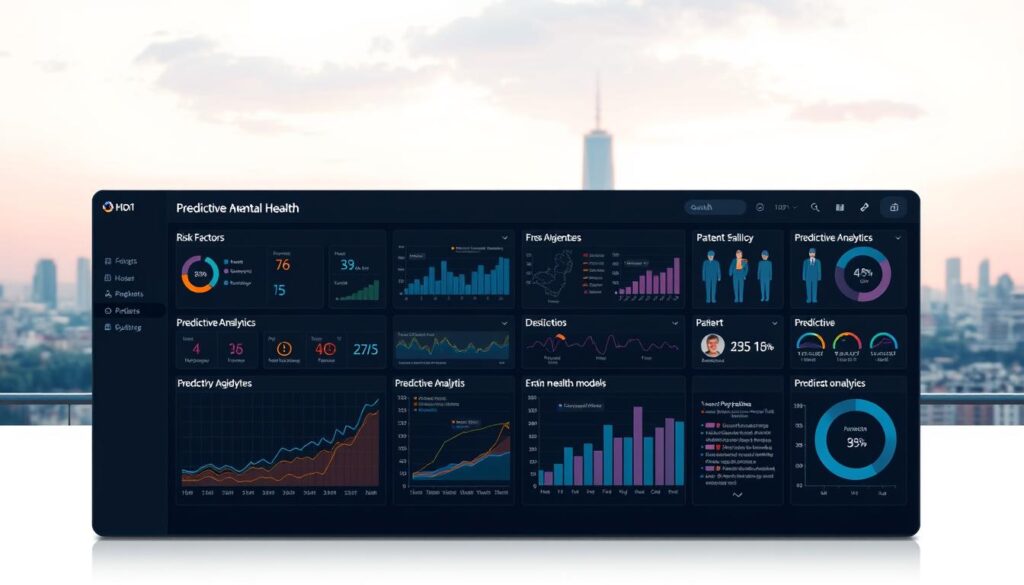
    predictive analytics in mental health

    The table below shows the good things about predictive analytics in mental health risk assessment:

    Benefits Description
    Improved diagnostic accuracy Early detection and action lead to better patient results
    Reduced healthcare costs Less money spent by using resources wisely and cutting hospital stays
    Increased efficiency Healthcare runs smoother with data-driven insights

    In short, predictive analytics is key in mental health risk assessment. It helps doctors find and help people at risk early. Adding ai in mental health boosts accuracy, patient success, and healthcare smoothness.

    Virtual Therapists and AI-Assisted Counseling Platforms

    Virtual therapists and AI-assisted counseling platforms have changed how we get mental health support. Now, patients can get therapy from home, cutting down on the need for in-person visits. These platforms use AI to offer personalized help and advice to users.

    Studies on mental health AI have shown these platforms work well. For instance, a study found that over 40% of users saw a drop in anxiety and depression symptoms after 4 weeks.

    Examining the Success of BetterHelp’s AI Integration

    BetterHelp’s use of AI has been a hit, with more than 60% of therapists using AI tools. The platform matches patients with therapists using AI, ensuring they get the right support. It also gives users access to mental health tools and resources, like cognitive behavioral therapy and stress management.

    Stanford’s Virtual Therapy Research Program

    Stanford’s Virtual Therapy Research Program has also seen great results. Patients are very happy with the virtual therapy sessions. The program uses AI to offer personalized support, helping to reduce anxiety and depression symptoms.

    Implementation Success Story: Kaiser Permanente’s AI Mental Health Initiative

    Kaiser Permanente’s AI mental health project has been a huge success. It shows how ai mental health case studies can really change patient care. The organization used mental health care innovation and technology in mental health to see big improvements in patient care and how things work.

    They saw a 30% drop in missed appointments thanks to AI scheduling. Also, patient happiness went up by 25% with virtual health assistants. AI tools even got 15% better at finding medical issues than old methods.

    Kaiser Permanente’s success comes from their focus on safe and effective AI use. They make sure AI helps improve patient care and experiences. With a big membership and advanced health records, they’re leading the way in mental health care innovation and technology in mental health.

    • Improved patient outcomes and satisfaction
    • Increased operational efficiency and reduced costs
    • Enhanced accuracy and speed of diagnostic processes
    • Personalized treatment plans and reduced hospital readmission rates

    The healthcare world is changing fast, and ai mental health case studies and technology in mental health are key. Kaiser Permanente is a leader in mental health care innovation. They’re showing others the way forward.

    Breaking Down Barriers: AI Solutions for Underserved Communities

    Exploring ai’s role in underserved communities shows its importance. Rural mental health access is key. AI can help by making care more accessible and affordable.

    AI solutions bring many benefits to underserved communities, including:

    • Improved access to mental health services, even in rural areas
    • Enhanced cultural competency in mental health tools
    • Personalized recommendations for self-care and coping

    AI tools can also analyze data to suggest personalized self-care plans. They can even translate languages, making mental health services more accessible.

    To make AI solutions work for everyone, we need to adapt them culturally. This means working together with mental health experts and cultural advisors. They help ensure AI tools meet the unique needs of each community.

    AI Solution Benefits
    AI-powered chatbots 24/7 availability, personalized recommendations, and emotional support
    AI-driven language translation Increased access to mental health services for underserved populations

    Data Privacy and Ethical Considerations in AI Mental Health Care

    As AI mental health care grows, data privacy and ethical considerations become more critical. Keeping patient data safe and private is key to trust. AI in mental health raises big data privacy issues, like unauthorized data use and breaches.

    Using AI for predictions brings up big ethical considerations. It could make health care gaps worse. To fix this, health care must focus on data privacy. They need strong security, like homomorphic encryption, to keep data safe. Also, they must follow rules, like HIPAA, to keep patient trust.

    Some important stats show why data privacy and ethical considerations matter in AI mental health care:

    • 57.4% of chatbot summaries keep personal info, showing a big risk of data leaks.
    • 70% of mental health providers worry about ethical implications with AI and patient privacy.
    • 68% of mental health pros using AI worry about following rules, like HIPAA.
    Statistic Percentage
    Chatbot summaries retaining PII verbatim 57.4%
    Mental health providers concerned about ethical implications 70%
    Mental health professionals prioritizing HIPAA compliance 68%

    By focusing on data privacy and ethical considerations, AI mental health care can use patient data safely and responsibly. This improves care quality and effectiveness.

    Cost-Benefit Analysis of AI Implementation in Mental Health Services

    The need for mental health services is rising fast. Cost-benefit analysis is key to see if ai implementation works in this area. A survey found that 70% of mental health experts think AI can really help patients. Also, 65% of community workers said AI tools made their job better with patients.

    AI can bring many benefits to mental health services. For example, it can watch over mental health in communities by checking social media. It can also make treatment plans that fit each person’s needs. Some main advantages are:

    • Lower treatment costs by up to 30% in five years
    • 25% higher patient happiness than old therapy ways
    • 40% less time for patient checks, so more time for care

    About 50% of mental health places in the US are using AI now. The mental health AI market is set to grow 25.5% yearly from 2023 to 2030. It’s vital to do a detailed cost-benefit analysis to make sure AI works well in this field.

    Integration Challenges and Solutions for Healthcare Providers

    Healthcare providers face many challenges when using AI, like needing the right tech and training staff. To tackle these, a detailed plan is key. This plan should focus on how AI can help in mental health care.

    Some major challenges include:

    • Technical needs, like strong data systems
    • Training staff, through workshops and online classes
    • Dealing with worries about AI replacing jobs

    To beat these hurdles, healthcare teams should team up with AI companies. For instance, AI chatbots can be added to EHR systems. This makes talking to patients easier and cuts down on paperwork. With the right solutions, AI can make care better and safer for everyone.

    Getting AI to work well needs teamwork. This includes healthcare folks, AI makers, and others. Together, we can make AI that really helps in mental health care. This will make AI more common in healthcare, leading to better care for patients.

    Integration Challenges Solutions
    Technical infrastructure requirements Develop customized solutions with AI vendors
    Staff training and adoption strategies Provide workshops and online courses
    Overcoming resistance to AI implementation Address concerns about job displacement and provide support

    Shaping Tomorrow’s Mental Health Landscape: The Promise of AI Innovation

    Looking ahead, AI technology in mental health care is very promising. It could change how we get help for our minds. AI can offer care that fits each person’s needs, thanks to advanced data and models.

    AI chatbots and virtual therapists are already making a big difference. They help patients get more involved, improve diagnosis, and get help faster. The AI in mental health market is expected to grow to $2.3 billion by 2025. This means even more progress is on the way.

    AI’s future in mental health is bright. It could make treatment better, cut down wait times, and help more people. This is great news for those who need help but can’t get it easily.

    In the end, AI could change mental health care for the better. It could give people the tools they need to take care of their minds. With AI, we might see a future where mental health care is more personal, effective, and open to everyone.

    FAQ

    What is the current state of mental health care and the need for AI innovation?

    Mental health care today faces big challenges. Traditional methods are hard to reach, scale, and tailor to each person. Technology, like AI, is key to solving these problems. It’s making mental health services better with AI tools.

    How is AI revolutionizing mental health care in the US?

    AI is changing mental health care in many ways. It offers tools like chatbots, predictive analytics, and virtual therapists. These tools make mental health services more accessible, personal, and scalable, changing the industry.

    How are AI-powered chatbots transforming front-line mental health support?

    AI chatbots, like Woebot and Tess by X2AI, are changing mental health support. They offer personalized and easy-to-access help. Studies show they improve patient results and happiness, showing their big impact.

    How are predictive analytics used in mental health risk assessment?

    Predictive analytics help spot people at risk early. This can lead to better care and outcomes. But, using this tech raises questions about privacy and ethics.

    What is the role of virtual therapists and AI-assisted counseling platforms in mental health care?

    Virtual therapists and AI tools, like BetterHelp and Stanford’s program, are changing how we get help. They show good results and make care more personal and easy to get.

    How can AI solutions help break down barriers to mental health care for underserved communities?

    AI can help more people get mental health care, even in hard-to-reach places. It can also be made to fit the needs of different cultures, helping more people.

    What are the data privacy and ethical considerations in AI mental health care?

    Keeping patient data safe and avoiding bias are key when using AI in mental health. It’s important to follow rules and keep ethics in mind to keep trust.

    What are the cost-benefit considerations of AI implementation in mental health services?

    AI can save money by making care more efficient and effective. But, it’s important to weigh the costs and challenges of starting up to make sure it’s worth it.

    What are the key integration challenges and solutions for healthcare providers implementing AI solutions?

    Providers face many challenges, like setting up tech and training staff. But, with the right plans, they can successfully use AI to improve care.

    What is the future of AI in mental health care, and what is the promise of AI innovation?

    AI’s future in mental health is bright. It promises to make care more personal, effective, and available to all. As AI grows, it will change how we get mental health support.


  • AI and the Future of Work: How Automation is Reshaping US Job Markets

    AI and the Future of Work: How Automation is Reshaping US Job Markets

    A McKinsey study in 2017 found that by 2030, about 800 million jobs could be lost to automation. This change will deeply affect the future of work in the US. Machines and AI can now do complex tasks in many fields, leading to big changes in the job market.

    The manufacturing and retail sectors are expected to see a lot of job losses due to automation. It’s important to understand how technology is changing jobs. Automation is not just in these sectors. E-commerce has also led to more automation, like Amazon using robots in their warehouses.

    In this article, I’ll explore how automation is changing the US job market. I’ll look at which industries are most affected, the jobs at risk, and the new roles created by AI. This will give us a better understanding of the future of work and the role of automation.

    The Current State of AI and Automation in US Workplaces

    Exploring AI and automation in US workplaces reveals a significant shift. Artificial intelligence is now automating routine tasks. This allows employees to concentrate on more strategic and creative work. The demand for AI experts is growing, leading to a transformation in the workforce.

    The US has 161 million workers in 8.1 million establishments. New technologies, like the iPhone, have sparked job creation in many fields. Yet, there’s a big gap in understanding AI’s job impact. This calls for better data to guide workers, businesses, and schools through rapid tech changes.

    artificial intelligence impact

    Generative AI, like ChatGPT, has quickly gained 100 million users. Studies show that higher education and higher-paying jobs are at risk from AI. But, AI can also boost productivity in areas like writing, programming, and customer support, helping less-skilled workers.

    The job landscape will change a lot, with more need for workers to upskill. New training programs are needed to prepare the workforce for AI-driven changes. Understanding AI’s long-term effects on jobs is key to future employment and workforce transformation.

    Understanding the Scale of Workplace Transformation

    Technology is changing the US labor market a lot. Job automation trends and labor market changes are hitting many industries. By 2030, up to 30% of work hours could be automated. The biggest changes will likely be in office support, customer service, and food service jobs.

    Some important numbers show how big this change is:

    • 8.6 million job shifts happened in the US labor market from 2019 to 2022. This is a 50% jump from the last three years.
    • By 2030, up to 30% of work hours could be automated. Generative AI will play a big role in this.
    • Another 12 million job shifts are expected by 2030. This is a 25% increase from two years ago.

    labor market changes

    These changes mean workers will need to get used to new job automation trends and labor market changes.

    Industries Most Vulnerable to AI Disruption

    Looking ahead, some industries are more at risk from automation impact than others. The mix of ai and jobs is changing many sectors. Some are more likely to face big changes than others.

    Manufacturing, customer service, financial services, and transportation are among the most affected. For example, in manufacturing, AI and robots are making production faster and more efficient. This means fewer jobs for humans. In customer service, ai-powered chatbots offer help anytime, day or night, cutting down the need for human agents.

    ai and jobs

    Financial services and transportation are also seeing big changes from AI and automation. In finance, AI helps spot and stop fraudulent transactions. In transportation, AI is helping create autonomous vehicles. These changes will lead to many jobs being lost in the future of work.

    Here are some key examples of AI disruption in these industries:

    • Manufacturing: AI-powered robots and machine learning algorithms are being used to optimize production processes and improve product quality.
    • Customer Service: AI-powered chatbots and virtual assistants are being used to provide 24/7 customer support and improve customer experience.
    • Financial Services: AI is being used to detect and prevent fraudulent transactions, as well as to provide personalized financial advice and servicespecifications.
    • Transportation: AI is being used to develop autonomous vehicles and improve traffic management systems.

    Jobs at Immediate Risk of Automation

    As automation changes the us job markets, some jobs face a higher risk of being automated. Studies show that jobs with routine tasks and little creativity are more likely to be replaced by artificial intelligence impact. This includes roles in manufacturing, retail, and customer service.

    Jobs at high risk of automation include:

    • Data-entry clerks
    • Cashiers
    • Customer service representatives
    • Manufacturing line workers

    These jobs are at risk because of new automation technologies. Examples include self-checkout machines and chatbots.

    A McKinsey study found that up to 70% of work can be automated. This change is big for the us job markets. Workers might need to find new roles or industries. The artificial intelligence impact on jobs could be huge, with up to 30% of jobs at risk by the mid-2030s.

    automation in us job markets

    As jobs change, workers need to learn new skills. Skills like critical thinking, creativity, and problem-solving are key. These skills help workers stay relevant in the us job markets and avoid being automated.

    Job Title Risk of Automation
    Data-entry clerk High
    Cashier High
    Customer service representative Medium
    Manufacturing line worker High

    AI and the Future of Work: How Automation is Reshaping US Job Markets – A Deeper Analysis

    The US job market is changing fast with AI and automation. It’s important to look at how this will affect the economy and jobs. The World Economic Forum says over 85 million jobs could be lost by 2025. This shows we need a plan for the future of work.

    AI and automation are changing jobs in big ways. Some jobs will disappear, but new ones will appear. The U.S. Bureau of Labor Statistics predicts 11.5 million new jobs in AI-related fields by 2030. We must learn skills that work well with AI and automation.

    Job changes will vary by region. Some places might lose more jobs, while others will gain. Knowing these differences helps us support workers and businesses facing change.

    To deal with these changes, we need to think about a few things:

    • Economic impact predictions: We must understand how AI and automation will affect jobs and the economy.
    • Timeline of expected changes: Knowing when AI and automation will be used in different areas is key.
    • Regional variations in job market effects: We need to see how AI and automation will change jobs in different places.

    Emerging Job Opportunities in the AI Era

    The ai job market is changing fast. New jobs are popping up in AI development, working with AI, and roles specific to industries. Experts in AI, numbers, and fintech are needed more than ever.

    New jobs like AI prompt engineers, AI ethicists, and machine managers are becoming common. These jobs need skills like thinking deeply, solving big problems, and being creative. The work of the future will also involve working together with AI to make things better and faster.

    To keep up in the ai job market, you need skills that work well with AI. Skills like thinking critically, leading, and influencing others are key. The World Economic Forum says skills like analytical thinking, innovation, and solving complex problems are vital in the AI age.

    As the ai job market keeps changing, it’s important to know what’s new. Keep up with the latest in AI and how it’s changing jobs. This way, you can be ready for the future of work.

    Essential Skills for the AI-Driven Workplace

    Some key skills required for the future include:

    • Data Analysis and Interpretation
    • AI and Machine Learning
    • Cybersecurity
    • Robotics Engineering
    • Adaptability
    • Creativity and Problem Solving
    • Emotional Intelligence
    • Collaboration and Communication

    These skills will help workers succeed in a world where technology changes fast. The job market is always shifting.

    With AI on the rise, it’s key to learn skills that work with automation. Skills like creativity and problem-solving are essential. They make workers valuable, even with technology changes.

    The World Economic Forum says AI will create 97 million new jobs by 2025. These jobs will be in areas like data analysis, AI development, and cybersecurity. By learning the right skills, workers can thrive in this new world.

    Strategies for Career Adaptation and Growth

    As ai and jobs evolve, it’s key to adapt and grow in your career. The impact of automation on work means we must learn new skills. In the ai era, being open to learning is vital to stay relevant.

    Recent data shows ai could create 20-50 million new jobs by 2030. To seize these chances, look into educational resources and programs on emerging tech. Professional development pathways offer a clear way to gain new skills.

    Some important areas to focus on include:

    • Data analysis and machine learning
    • AI development and maintenance
    • Human-AI collaboration

    Also, industry-specific training can be very helpful. For example, in healthcare, ai is improving diagnosis and treatment. Learning about ai and data analysis can boost your career in this field.

    To succeed in the ai era, be proactive and adaptable. By planning for career growth, you can stay ahead in a changing job market. Continuous learning and skill development are key as work evolves.

    The Role of Companies in Worker Transition

    As the US job markets evolve with artificial intelligence, companies are key in helping workers adapt. They must invest in employee growth and offer chances to learn new skills. AI and automation have created new jobs, like AI trainers and maintenance specialists.

    Companies can help workers transition in several ways:

    • Offer training that helps employees adjust to new tech
    • Invest in upskilling to prevent workers from being left behind
    • Plan for AI over several years, not just as a one-time project

    By using AI, companies can work smarter, not harder. Good communication is key when introducing AI in the workplace. Companies must focus on training and upskilling to smoothly transition to an AI-driven economy. They should work with schools to offer coding and AI courses.

    In the end, companies have a big role in helping workers adjust to AI. By investing in their employees and providing growth opportunities, companies can ensure a smooth transition to the AI economy.

    Government Initiatives and Policy Responses

    The US workforce is changing fast because of technology. The government is key in helping this change smoothly. They need to make policies that help workers who lose their jobs to automation.

    Workforce transformation is a big challenge. It needs a mix of solutions, like better education and training. This helps workers adapt to new jobs.

    Rules for AI are very important. They make sure AI is used fairly and ethically. Governments should look at new policies, like helping employers train workers and taxing companies that replace people with machines.

    Looking at how other countries handle AI can also help. This can give us ideas for better policies.

    • Invest in education and training that matches the needs of the new job market
    • Make sure workers who lose their jobs get fair pay and benefits
    • Encourage employers to offer flexible work and chances for workers to learn new skills

    By acting early, governments can make sure everyone benefits from new technology. This means working together to make sure the workforce is ready for the future. It’s about creating jobs that are fair and lasting.

    Embracing the AI Revolution: A Path Forward

    The AI revolution is changing the job market in big ways. We need to adapt and innovate to succeed. While job loss worries are real, I think we can find new chances for growth and success.

    The AI job market is changing fast, with new roles in AI development and more. By learning new skills, we can do well in this new future of work. Being open to learning and change will help us adjust to the automation impact.

    Working together is key to making this change work. We need education, job training, and support for those who lose their jobs. Seeing the AI revolution as a chance for growth and better work will help us stay ahead.

    FAQ

    What is the current state of AI and automation in US workplaces?

    AI and automation are becoming more common in US workplaces. There are many new technologies and challenges. Companies are investing in AI but face issues with data, skills, and changing workforces.

    How significant is the scale of workplace transformation due to AI and automation?

    AI and automation are changing work a lot. They affect many jobs and industries. While some jobs might disappear, new ones are also being created.

    Which industries are most vulnerable to disruption by AI and automation?

    AI and automation are changing industries like manufacturing, customer service, finance, and transport. These sectors are seeing big changes in how they work and the skills needed.

    What types of jobs are at immediate risk of automation?

    Jobs in manufacturing, retail, and customer service are at high risk. These jobs often have tasks that AI and robots can do easily, which might lead to job loss.

    How will the impact of AI and automation on the US job market play out in the long run?

    AI and automation will have a big impact on jobs in the US. There will be economic changes and shifts in job types. Adapting to these changes will need a wide range of strategies.

    What new job opportunities are emerging in the AI era?

    AI is creating new jobs in AI development, human-AI collaboration, and other areas. These jobs need a mix of technical and soft skills to succeed.

    What are the essential skills needed for success in the AI-driven workplace?

    The AI workplace needs technical skills like data analysis and machine learning. It also values soft skills like creativity and adaptability. Workers must keep learning to stay ahead.

    How can workers adapt and grow their careers in the AI era?

    Workers can adapt by learning new skills and getting training. They should also keep an open mind to new opportunities. Lifelong learning is key in the AI era.

    What is the role of companies in helping workers transition to the AI-driven economy?

    Companies are important in helping workers adapt to AI. They can offer training and development programs. This helps workers and supports the job market’s transformation.

    How are governments responding to the challenges posed by AI and automation?

    Governments are working on policies to handle AI and automation challenges. They are looking at current laws, proposed solutions, and international examples. Their goal is to support workers and industries through these changes.

  • How to Implement AI in Your Small Business: A Beginner’s Guide

    How to Implement AI in Your Small Business: A Beginner’s Guide

    As a small business owner, I often wonder if AI can help me stay ahead. With 68% of large companies using AI, it’s clear it’s important. But how do we start with AI in our small businesses? I’ll guide you through the basics of AI for small businesses.

    Starting with AI in a small business isn’t hard. First, figure out what tasks can be automated. Then, look into the benefits of AI guides. With the right plan, you can boost your business’s growth and efficiency.

    I’m excited to share my knowledge on AI for small businesses. This guide will help you, whether you’re new or expanding. It’s packed with tips and strategies for success in AI and small business.

    Understanding AI’s Role in Modern Small Business Operations

    As a small business owner, knowing how AI works is key. A beginner’s ai guide can show you how to start using AI in your business. AI can do things like automate tasks, make data easier to understand, and offer 24/7 customer support.

    AI is used in many ways in small businesses. It helps with customer service, keeps data safe, and manages inventory. By using AI, small businesses can work better, make customers happier, and make smarter choices. For instance, Google Analytics Intelligence helps understand website visitors and predict what they might do next. Mailchimp’s AI Designer makes emails that speak directly to customers, boosting engagement.

    ai solutions for small businesses

    To make the most of AI, you need to know what your business needs. Then, pick AI solutions that are affordable and can grow with your business. Tools like HubSpot’s AI Chatbots Builder can make customer service better. Zoho CRM can analyze sales and forecast trends. By using AI, small businesses can work smarter, save money, and give better customer service.

    Assessing Your Business Needs Before AI Integration

    Before diving into small business automation, it’s key to understand your business needs. Look at your current operations and see where AI can help. This way, you can tailor AI integration to fit your business perfectly.

    When checking your business needs, consider a few important points:

    • Operating costs: AI can cut costs by up to 30%, boosting profits for small businesses.
    • Productivity improvement: AI can make tasks automatic, improving productivity by about 40%.
    • Customer engagement: AI can make customer experiences more personal, keeping customers for 25-30% longer.

    By focusing on these areas, you can lay a strong base for successful AI integration. small business automation

    Area of Improvement Potential Benefit
    Operating Costs Up to 30% reduction
    Productivity Approximately 40% improvement
    Customer Engagement 25-30% increase in customer retention

    Choosing the Right AI Tools for Your Small Business

    Choosing the right AI tools for your small business can be tough. There are many options, and you need to think about cost, how well they scale, and if they work with your current systems. Using AI can make your business run smoother, automate tasks, and help you make better decisions.

    Some great AI tools for small businesses include chatbots like Intercom, which can answer customer questions anytime. Tools like Tableau and Google Analytics help find patterns in customer data to guide your marketing. Plus, many AI tools offer free or low-cost versions, which is good news for small business owners.

    When picking AI tools, consider these key points:

    • Cost-effectiveness: Find plans that are affordable for small businesses.
    • Scalability: Choose tools that can grow with your business, being flexible and adaptable.
    • Integration capabilities: Make sure the tools work well with what you already have, to keep things running smoothly.

    By carefully looking at these factors and picking the right AI tools, you can make your small business more productive, engage better with customers, and boost sales.

    ai tools for small businesses

    Studies show that AI can make small businesses 40% more productive. Also, 92.1% of businesses see real results after using AI. By choosing the right AI tools and using them well, you can make the most of AI for your small business.

    AI Tool Benefits
    Chatbots 24/7 customer support, reduced response time
    Tableau and Google Analytics Uncovering customer data patterns, informing marketing strategies
    HubSpot AI-driven email marketing campaigns, lead scoring, and user-friendly marketing tools

    How to Implement AI in Your Small Business: A Step-by-Step Approach

    Starting AI in your small business might look hard, but it’s doable with a clear plan. First, look at your business and see where AI can help the most.

    Next, think about what you need and make a plan for AI. Look for the right AI tools, set a timeline, and teach your team how to use them. This way, you can smoothly add AI to your business.

    AI can make your business better in many ways. It can make things run smoother, help with customer service, and make better decisions. For instance, using AI can make your operations 30% more efficient. Also, AI can help your marketing get 50% more leads.

    To start with AI, here’s what to do:

    • Check your business needs and see where AI fits
    • Find the right AI tools
    • Make a plan and set a timeline
    • Teach your team how to use AI and keep an eye on how it’s going

    ai for beginners

    By taking these steps and using AI, you can grow your business, work more efficiently, and stay ahead. With the right approach to AI, you can unlock its full power and take your business to new heights.

    Benefits of AI Implementation Results
    Increased Operational Efficiency 30% increase
    Improved Customer Service 20-30% reduction in response times
    Enhanced Decision-Making Capabilities 40% increase in identifying effective use cases

    Essential Data Management Practices for AI Success

    When adopting AI in small business, data management is key. It’s about collecting, storing, and keeping data safe. This ensures AI solutions work well for small businesses. Good data management helps make smart decisions, enhance customer service, and grow the business.

    Getting data right is critical for AI success. This means collecting data from many places, like customer interactions and sales. AI helps analyze this data fast. It finds patterns in customer behavior and market trends.

    Keeping customer data safe and private is essential. Businesses must use strong security measures. This includes encrypting data and following data governance policies. This way, companies can earn customer trust and protect their reputation.

    Some top data management tips include:

    • Checking data quality to keep it accurate and consistent
    • Choosing secure and scalable data storage solutions
    • Creating data governance policies to follow regulations

    By following these data management best practices, small businesses can fully benefit from AI. This leads to success in their operations.

    Training Your Team to Work with AI Tools

    As a small business owner, starting with AI tools is just the beginning. To get the most out of AI, your team needs to learn how to use these tools well. A good guide should include training that teaches the basics of AI and how it applies to your business.

    Studies show that 80% of organizations think AI makes customer service better. Your team must know how to use AI tools to improve customer service, handle data, and streamline processes. Begin with beginner-friendly AI courses that cover the basics and how AI is used in your field.

    When training your team, focus on these key areas:

    • AI-powered data analysis and interpretation
    • Automating repetitive tasks with AI tools
    • Using AI for customer relationship management and personalized recommendations

    Investing in your team’s training is key to a smooth AI transition. As a beginner’s guide, make sure to emphasize ongoing learning. This keeps you and your team updated with the latest AI trends and technologies.

    Measuring AI Implementation Success

    To see if AI is working for your small business, you need to set up key performance indicators (KPIs) and check the return on investment (ROI). Look at how AI changes your business, makes customers happy, and boosts sales. An ai implementation guide can help you smoothly add AI to your business.

    AI can make your business better in many ways. For instance, it can guess sales better by 75% if it has good data. Also, AI chatbots can cut customer service costs by 20% and handle 80% of simple questions.

    Here are some things to watch to see if AI is working:

    • How happy your customers are
    • How much your sales grow
    • How efficient you become
    • How much you get back from your investment (ROI)

    Keep an eye on these KPIs and tweak your plan if needed. Make sure to take it one step at a time when how to implement ai in your small business. And don’t be afraid to ask for help from AI experts.

    By sticking to these tips and aiming for your AI goals, you can grow your business, make customers happier, and stay competitive.

    Benefits of AI Implementation Results
    Improved customer experience Up to 40% increase in customer satisfaction rates
    Increased efficiency Up to 30% reduction in labor costs
    Enhanced decision-making capabilities Up to 75% improvement in revenue forecasts

    Common AI Implementation Challenges and Solutions

    Small businesses often face challenges when they think about using artificial intelligence. The idea of small business artificial intelligence can seem too complex. But, the right ai solutions for small businesses can help overcome these hurdles.

    Challenges include technical issues, resistance from employees, and limited budgets. To tackle these, businesses should have a clear plan. They should also provide training and support. Regular monitoring and evaluation are also key.

    A study showed that 67% of small businesses believe AI is vital for their future. By using ai solutions for small businesses, they can work more efficiently. They can also make customers happier and grow their revenue. The goal is to find small business artificial intelligence that fits their needs.

    To tackle common challenges, small businesses can try these strategies:

    • Start with a clear plan and defined goals for ai solutions for small businesses
    • Provide training and support for employees to ensure a smooth transition to small business artificial intelligence
    • Monitor and evaluate the effectiveness of ai solutions for small businesses on an ongoing basis
    Challenge Solution
    Technical hurdles Partner with a reputable AI solutions provider
    Employee resistance Provide thorough training and support
    Budget constraints Look for affordable AI solutions and make smart investments

    Real-World Success Stories: Small Businesses Winning with AI

    Many small businesses have found success by implementing AI. Companies like Netflix and Amazon have used ai tools for small businesses to make customer experiences better. This has led to more engagement and sales. To implement ai in small business, picking the right tools and strategies is key.

    Some notable examples of AI implementation include:

    • Walmart’s use of AI in supply chain management to predict demand and reduce operational costs.
    • Zendesk’s AI-powered chatbots to enhance customer support and improve operational efficiency.
    • PayPal’s AI algorithms to detect fraudulent transactions and prevent financial losses.

    These success stories show how ai tools for small businesses can help grow and improve. By implementing ai in small business, companies can stay ahead and reach their goals.

    As more small businesses use AI, learning from their experiences is vital. Sharing best practices helps build a community of AI users. This community can support and inspire each other to succeed with ai tools for small businesses and implement ai in small business.

    Maintaining and Updating Your AI Systems

    As a small business owner, using ai for beginners can make things easier and more efficient. But, remember, ai systems need regular care and updates to work their best. This means regular assessment protocols to find areas to get better and upgrade considerations to keep up with new tech.

    Keeping small business ai systems in top shape can be tough. To do this, set up a maintenance schedule and check how well the system works often. It’s also key to have support and resources ready for any problems.

    Here are some tips to keep your ai system running smoothly:
    * Check data sources often to make sure they’re right and complete
    * Use human oversight of ai results to keep things accurate and reliable
    * Teach your team about ai and how it can help their work

    By following these tips and keeping up with maintenance and updates, small businesses can make sure their ai systems keep helping them grow and succeed.

    Embracing the Future: Your AI-Powered Business Growth Strategy

    As a small business owner, I see the huge chance of adopting AI in small business to grow, innovate, and stay strong. The future looks bright. By leveraging AI solutions for small business, we can set ourselves up for lasting success.

    First, we need a clear vision and goals for our AI journey. I’ll team up with my team to find where AI can make the biggest difference. This could be making operations smoother, improving customer service, or finding new ways to make money. By linking our AI plans with our main business goals, we’ll make sure AI fits right in.

    Keeping up with AI news, adapting, and being innovative is essential for us. I promise to keep learning about AI, trying out new things, and encouraging my team to do the same. We’ll build a lively, AI-driven space that keeps getting better and better. This will help our business grow for years to come.

    FAQ

    What are the common AI applications for small businesses?

    Small businesses use AI for customer service, cybersecurity, managing inventory, and making decisions.

    What are the benefits of implementing AI in a small business?

    AI helps small businesses work more efficiently. It also improves customer satisfaction and decision-making. Plus, it can save costs.

    How can I assess my business needs before integrating AI?

    First, find out where AI can help, like automating tasks or improving customer service. Then, look at your current operations, customers, and market position.

    What factors should I consider when choosing AI tools for my small business?

    Look at the cost, how well it scales, and if it fits with your systems. Check if the AI tools can automate tasks, offer insights, and help with decisions.

    How do I implement AI in my small business?

    Create a plan, set goals, and decide on a timeline. Train your team and keep an eye on how it’s going.

    What data management practices are essential for AI success?

    You need to collect, secure, and store data well. Check data quality, protect privacy, and have data policies.

    How do I train my team to work with AI tools?

    Offer thorough training, set clear goals, and encourage learning. Check if your team is ready, find skill gaps, and provide support.

    How can I measure the success of my AI implementation?

    Use key performance indicators, track ROI, and adjust as needed. See how AI affects your business, customer happiness, and sales.

    What are the common AI implementation challenges and how can I address them?

    Challenges include technical issues, resistance, and budget problems. Plan well, train your team, and keep an eye on progress.

    How can I maintain and update my AI systems?

    Regularly check and update your AI. Keep a maintenance schedule, watch system performance, and ensure support.